
Robert Banks
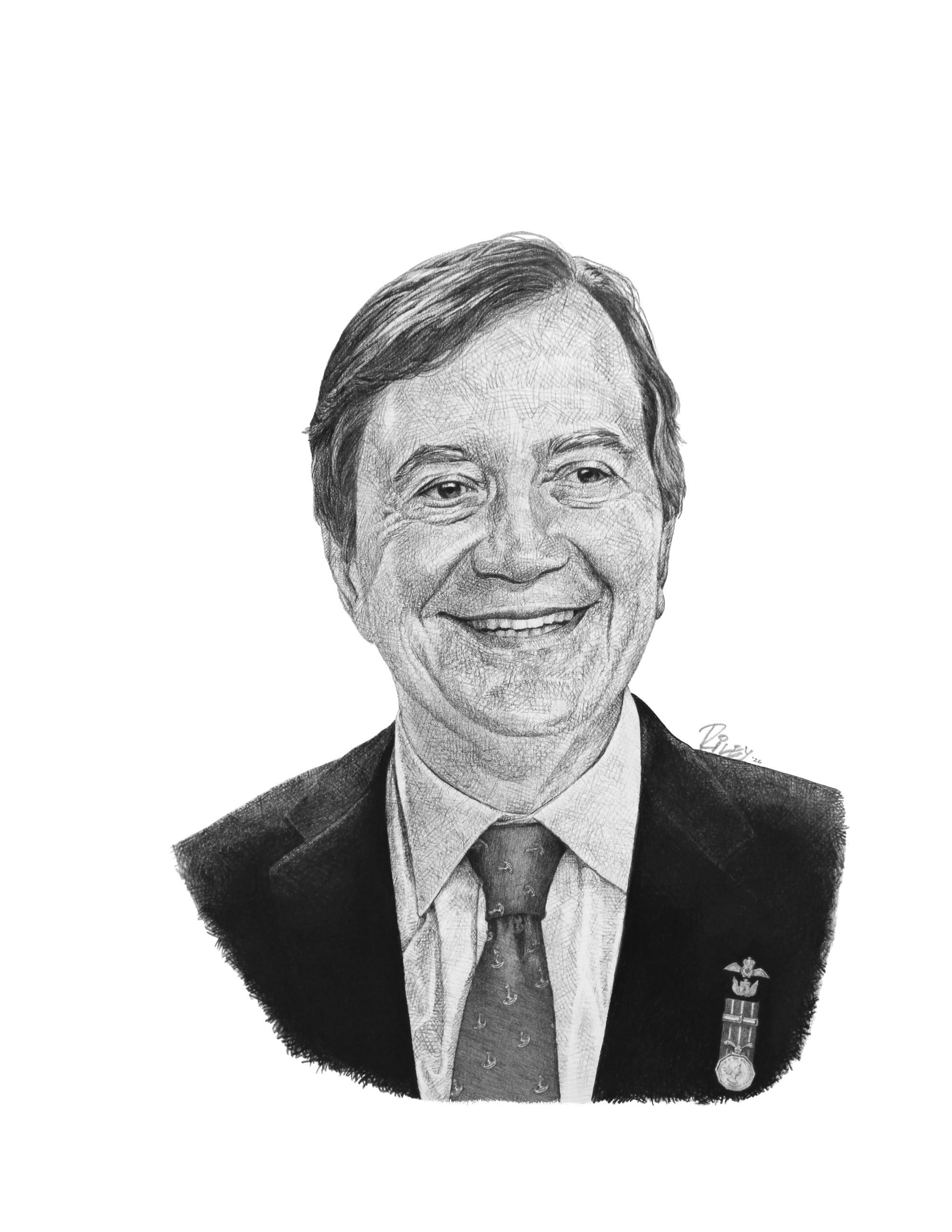
Birth Date: October 5, 1951
Birth Place: Pickering, Ontario
Year Inducted: 2026
Awards: Arnold D. Tuttle Award, Colonel John Paul Stapp Award, William Randolph II Lovelace Award
For his contributions as a pilot flight-surgeon in both Canada and internationally, including his work on identifying the push-pull effect, Bob Banks was inducted into Canada’s Aviation Hall of Fame at ceremonies held in 2026.
Robert Douglas Banks has had a distinguished career in aviation and aerospace medicine, with accomplishments that include identification of the push-pull effect and his work in flight crash investigation including the historic loss of NASA’s STS-107 Space Shuttle Columbia.
Born in 1951 to Don Banks and Jackie Leclerc, Bob was named after his uncle, a wartime RCAF tail-gunner who was shot down and evaded capture. He grew up in Whitby, Ontario, and as a kid saw military jets flying overhead, usually around CNE Airshow time. Bob soon developed a singular passion to fly fast jets. With that foremost in mind, by the time he attended high school at Anderson Collegiate and Vocational Institute he had developed into a good student and athlete, which earned him acceptance to College Militaire Royale de St. Jean in 1969. He subsequently graduated in Civil Engineering from the Royal Military College (RMC) in 1974 and was awarded his pilot wings one year later.
Bob’s first tour was with VU-32 Squadron at CFB Shearwater, Nova Scotia, flying the CT-133 to provide tactical and operational support to the Canadian Navy’s east coast fleet. He would log over 1,000 hours on the T-Bird. Bob’s commitment and interest in his work impressed his superiors. Although junior in rank, he was integral to the success of the 1979 Shearwater International Airshow during the Queen Mother’s visit to Nova Scotia.
In 1979, Bob and his young family were transferred to 407 Squadron in Comox, British Columbia. He soon qualified as a first officer on the CP-107 Argus, which he flew for two years before converting to the new CP-140 Aurora. While on the Argus, Bob participated in RIMPAC 80. Two years later he and his crew participated in RIMPAC 82 flying the Aurora. But this tour was cut short when he left to attend medical school at the University of Toronto through the Military Medical Training Plan. His goal was to become a pilot and a flight surgeon, an uncommon combining of skills.
Just before his graduation from medical school in 1987, Bob met Colonel George Miller (CAHF, 2015) who advised him to get a haircut and to prepare for flight-surgeon duties at CFB Moose Jaw. There, Bob requalified as a pilot on the CT-114 Tutor and supported flying operations as a pilot-flight surgeon. He also earned the call-sign “Sawbones,” a coveted honour passed on from earlier pilot-flight surgeons.
Bob soon re-established the air force’s air sickness rehabilitation program, which consisted of a ground-based program and air-based therapy with a pilot-flight surgeon - if available. After many cases over several years, Bob combined his own data and that of previous flight surgeons and published the results in 1992. He reported that the program’s overall success rate was 77 per cent, that air sickness was treatable “in a majority of cases,” and that its efforts “reaffirmed that desensitization of airsick student pilots is a valid clinical tool that remains an attractive alternative to medical attrition.”
During this time, there occurred a cluster of aircraft and car crashes involving pilots, some very public and including fatalities. These losses deeply affected staff, military families, and the community. Bob and members of his staff were first responders and subsequently provided supportive counselling to survivors, on scene personnel, and families.
“Dr. Bob” was also the designated flight surgeon of 431 Air Demonstration Squadron, the Snowbirds (CAHF, 1994). Supporting the Snowbirds meant flying with each pilot in their formation position to better understand the team’s unique challenges and flight environment.
When flying the Tutor, Bob noticed that he occasionally had trouble tolerating G-forces when high positive-G followed zero- or negative-G maneuvers. These types of maneuvers were common with the Snowbirds and were well known among fighter pilots.
To better understand the cause of this reduced G-tolerance, Bob and Dr Gary Gray (CAHF, 2023) designed an experiment in which pilots wearing sensors, including ambulatory electrocardiograms, flew a standardized series of negative- to positive-G transitions. The resulting data suggested that pilots’ heart rates slowed noticeably during negative-G and suffered impaired recovery time when exposed to positive-G conditions. This, Bob reasoned, meant that aviators might experience lower positive-G tolerances if coming out of a negative-G inducing maneuver.
Bob then left Moose Jaw to study advanced aerospace medicine with the United States Navy in Pensacola, Florida. During this residency, he was offered a chance to conduct a ground-based experiment using a unique NASA-built centrifuge. Working with Patti Saunders, formerly of the Defence and Civil Institute of Environmental Medicine (DCIEM) (CAHF, 2025), and other scientists and engineers, Bob designed an experiment involving six men and six women who were each subjected to acceleration stresses varying between negative-2 G and positive-2.25 G. The data clearly showed that exposure to zero- and negative-G significantly reduced positive-G tolerance and could lead to unexpected G-induced loss of consciousness (or GLOC). These findings explained the cause of fatal crashes in the RCAF, and those in other countries including the United States and United Kingdom. They have since been confirmed in human and animal model studies and are considered settled science, with wide-ranging implications that even include amusement ride designs like roller coasters.
Returning to Canada, Bob became Head, Central Medical Board at DCIEM at Downsview, in Toronto. Working with the Institute’s skilled team, he led continued research on the push-pull effect as Deputy Director, Human Protective Systems Division and then as Head, Aerospace Life Support. Scientists and engineers under his direction conducted cutting-edge research using advanced multi-gimballed U.S. based centrifuges. As the only military pilot, Bob was often the test subject.
Bob was also asked to determine why the Canadian Forces was experiencing a very high incidence of fatal crashes involving the CC-130 Hercules aircraft. Using a multi-disciplinary approach, his team established that human factors were major contributing factor. The study identified several key areas of concern, such as knowledge of aircraft systems and procedures, resource and workload management skills, and ill-preparedness to respond to unexpected events like system failures. Since implementation of the report’s recommendations, there have been no CC-130 fatal crashes.
Bob retired as a Lieutenant Colonel in 1997 and joined the Biodynamics Research Corporation (BRC) as a consultant focusing on aircraft and automobile crashes. While with BRC, he developed digital reconstruction techniques, innovative use of human computer modeling, and produced a steady flow of published papers. This work included the post-crash crew survival investigation of the loss of STS-107 Space Shuttle Columbia in 2003, a challenging task made harder by a lack of previous data and a nearly complete lack of data following the vehicle’s loss of control. As the principal consultant, Bob and colleague Dr Richard Harding led the effort to determine how the crew died, and what injuries their bodies incurred after death. He reached several important conclusions, among them that the crew’s fatal injuries were sustained because of trans-atmospheric trauma (a concept he helped to define), that decompression mishaps caused them to lose consciousness before sustaining this trauma, and that the crew’s suits and seats contributed to their lethal injuries. The latter finding led directly to changes in seat design for the remainder of the Space Shuttle program and influenced the design of future helmets used for space flight.
Bob retired from BRC as Executive Vice President in 2017. His research has been published widely, including in the Aerospace Medical Association journal, textbooks on aviation and space medicine, and by both NASA and DCIEM. He was lead author of the chapter, “Human Response to Acceleration”, in Fundamentals of Aerospace Medicine which is now a foundational text on the subject. He was also lead author of the chapter, “Spacecraft Accident Investigation”, in Principles of Clinical Medicine for Spaceflight, the first publication on the subject.
Since retirement, Bob has returned to old ground to develop a new talent: researching and writing a history of the Royal Naval Dockyard facilities at Point Frederick, where his alma mater RMC now stands. The book, Warriors and Warships: Conflict on the Great Lakes and the Legacy of Point Frederick, was published by Dundurn Press in 2023. It won that year’s prestigious Keith Matthews Best Book Award of the Canadian Nautical Research Society.
Twice the recipient of the Naval Aerospace and Operational Medicine Institute’s “Golden Apple Award” for outstanding teaching, Bob’s contributions have been recognized by his peers and colleagues. He received the Aerospace Medicine Association’s Arnold D. Tuttle Award for the most significant contribution to Aerospace Medicine in 1996. The Association also presented him with its Colonel John Paul Stapp Award in 2009 for outstanding contributions to biomechanics through his work on the Space Shuttle Columbia. In 2023, the Society of NASA Flight Surgeons awarded him the William Randolph II Lovelace Award for outstanding contributions to aerospace medicine. He was named to the RMC Wall of Honour in 2021.
Such recognition is richly deserved and only begins to hint at the depth of Bob Banks’s contributions and commitment to furthering aviation and aerospace medicine in Canada and internationally.
Robert Banks- 2026 Inductee
To return to the Inductee Page, please click here.