
Donald Carty
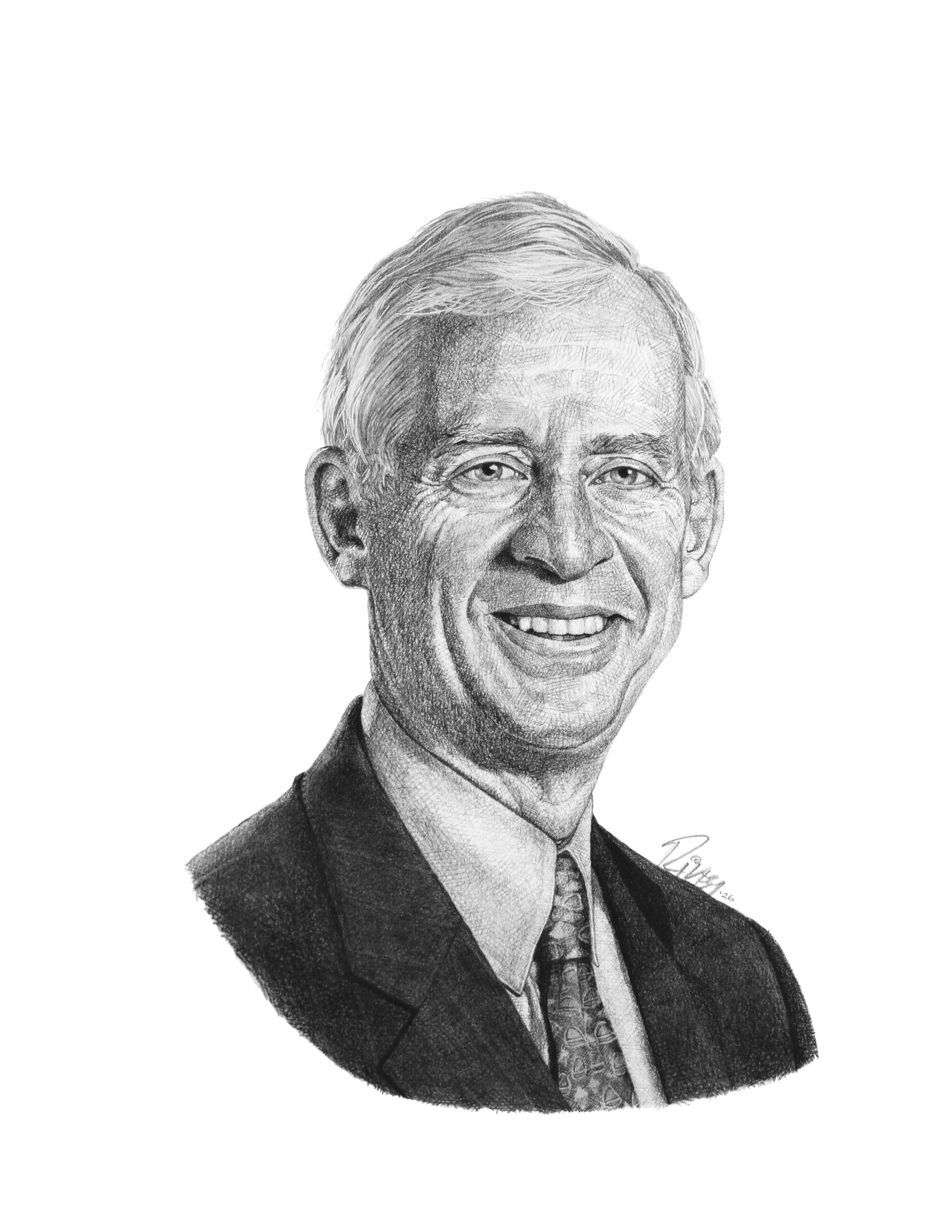
Birth Date: July 23, 1946
Birth Place: Toronto, Ontario
Year Inducted: 2026
Awards: Queen’s Golden Jubilee Medal, Member of the Order of Canada
For his leadership in the field of air transport in both Canada and the United States over a career spanning from the 1970s to today, including with American Airlines, Canadian Airlines, and Porter Airlines, Don Carty was inducted into Canada’s Aviation Hall of Fame at ceremonies held in 2026.
Born in Toronto in 1946 to Catherine and Kenneth Carty, Don was the second child of a family of five boys and one girl. They moved to Montreal, Quebec, when he was nine years old. He earned his bachelor’s degree from Queen’s University in 1968 and then attended Harvard University’s Graduate School of Business Administration, where he became interested in the airline industry.
Don’s father became seriously ill in 1971, just before Don graduated from Harvard. He returned to Montreal to be home with his family and began searching there for work. Harvard’s job centre indicated that Air Canada was hiring and he soon joined the airline’s finance department as a financial analyst. He had an eye-opening start. On his second day, his manager informed the office that on account of a rotating strike the baggage handlers at the Montreal airport had walked out and that administrative staff were now handling airport operations duties. Don reported to duty on the ramp, loading and unloading aircraft, including a daily fish catch from an inbound flight from Newfoundland. The work gave Don an immediate appreciation for ramp-level operations.
He was soon immersed in all matters airline, from recommendations on capital investments to asset management. In Air Canada’s case, Don was privy to some of the earliest discussions about privatizing the Crown Corporation, an exciting prospect that he laments he did not get to take part in as a business challenge (it would be nearly two decades before the initiative moved forward). Had it done so in the early 1970’s, Air Canada would have been at the forefront of airline privatization.
One first that he did take part in was thanks to Pierre Jeanniot (CAHF, 2012), future CEO of the airline, who recruited Don as the finance lead to create Air Canada’s first strategic plan. Don had become fascinated by the industry – it would prove a lifelong obsession – but he was also increasingly frustrated by the constraints of public ownership. He left to become an executive for Celanese Canada, Ltd, a Montreal-based industrial chemical company.
In 1978, Don stepped back towards aviation when he joined Americana Hotels, the hotel business operated by American Airlines, as Senior Vice President, Finance. He relocated to New York and began work on a turnaround plan for the otherwise struggling company. American was impressed by his efforts and, when it sold Americana a year and a half later, it created a position, VP, Operations Research, to keep him with the Airline. Don and his family headed next to Dallas, Texas, where American was relocating is headquarters.
The new position involved quantitative problem solving, using both data and technology to give American Airlines a strategic advantage. Common place today, this work was ahead of its time in the early 1980s. The research team started analyzing and modelling queuing patterns, shift times and staffing levels and composition, and sought to forecast route traffic and booking curves to develop future pricing strategies. Like so many other executives bitten by the airline business bug, the complexities involved proved fascinating for Don.
He did well, and in 1980 he was made VP, Profit Improvement, where he worked directly for airline President Robert Crandall and then quickly became VP, Controller; three years later he was promoted to Senior VP. It was a transformative time for the industry – deregulation and low-cost carriers were both challenging legacy carriers like American Airlines. Fleets were retiring early jetliners, like the 707; computer automation was increasing, including for booking systems; and new business models were being adopted, frequent flyer programs among them (American’s automated system was leaps ahead of the competition).
In 1985, CP Air recruited Don to be President and CEO, making him the last head of the airline before Rhys Eyton’s (CAHF 2022) PWA acquired it in 1987. Deregula-tion of the industry sparked a wave of consolidations, and under Don’s leadership CP bought Eastern Provincial Airways in 1986, followed by Nordair in 1987; partnerships with regional carriers, such as Quebec Air, Air Nova, and BC Air helped to give a re-branded Canadian Pacific Air Lines national coverage.
Don elected to return to American Airlines in 1987, as Senior VP, Planning, bringing with him the unique experience of having just run a Canadian airline. It was a good fit between he and American. The airline was looking to expand internationally, and Don soon took on increasing leadership roles. By 1998 he was President of AMR Corporation and American Airlines. That year he wed Ana; the happily married couple likes to say that they have four wonderful sons and one perfect child.
Don’s visionary leadership, which included spearheading creation of the OneWorld alliance of global carriers, helped to grow American Airlines into the world’s largest airline.
The 1990s also saw Don frequently involved in Canadian aviation. Early in the decade he was one of the main architects of his airline’s bid for a stake in Canadian Airlines, which after significant negotiation was implemented in 1993. There was a family connection during the deal-making: Don’s brother Doug was CFO at Canadian at the time of AA’s investment. The agreement saw American purchase 25 per cent of Canadian and was win-win for both companies. American achieved its goal of diversifying internationally, and Canadian gained much needed capital.
Running nearly concurrently with this investment was an effort to liberalize air service regulations between Canada and the United States. Throughout his career Don believed strongly in the benefits of Open Skies. “You have to ask,” he reflected in 2002 while discussing Canada-U.S. air travel, “what sense could it possibly make to have the world’s two biggest trading partners hamstrung by a restrictive aviation regime that dates back to 1938?” To that end, he played an important part in American’s advocacy for such a policy, which was formally adopted with the 1995 Open Skies agreement between the two countries.
Then, in 1999, Don spearheaded along with Gerry Schwartz’s Onex Corporation a hostile take over bid for Air Canada, in which the pair took on Robert Milton and Calin Rovinescu (CAHF, 2025). Although the bid ultimately failed, it represented another example of Don’s cross-border interest in aviation – a commitment that included the purchase of many Bombardier CRJ Regional Jets.
The morning of September 11, 2001, was one of the most difficult of Don’ career. Two of the hijacked planes on that awful day were operated by American Airlines and he received early notice by American’s Operations Center that they had lost control of the aircraft. So began a challenging series of communications between American, the FAA, the U.S. Secretary of Transport, and President George W. Bush. When it became clear that American Airlines jets had hit the World Trade Centre and the Pentagon, Don grounded the fleet ahead of the FAA’s decision to close U.S. air space.
The ensuing aftermath repre-sented a very difficult period. Don attended funeral after funeral and countless memorial services. Accompanying the emotional toll was realization that the airline industry was suffering one of its worst ever financial shocks. The effects were long-lasting and arguably accelerated the reorganiza-tion of many companies, American among them. Don’s leadership during this period helped his airline to avoid bankruptcy after 9/11 – the only one of his U.S. competitors to do so. He considers this his greatest achievement in business.
Don resigned from American Airlines in 2003 but remained in aviation. He joined the board of Hawaiian Airlines, chaired Virgin America’s, and became Chair of Porter Aviation Holding Inc., at the founding of its subsidiary, Porter Airlines. Don’s experienced leadership has served the company well; he worked with initial investors, critiqued the business plan, and established effective management structures, all of which set the tone for the new airline’s public reception.
In recognition of his important role in aviation, Don held the chair of the Air Transport Association of America in 2000-2001 and was appointed by President Bush to serve on the National Infrastructure Advisory Council (2002-2005). Queen’s University presented him with an honorary doctorate in 2001, and a year later he received the Queen’s Golden Jubilee Medal and was made an Officer of the Order of Canada. These and other honours recognize Donald Carty’s many contributions to aviation and his decades of leadership in air transport.
Don Carty- 2026 Inductee
To return to the Inductee Page, please click here.